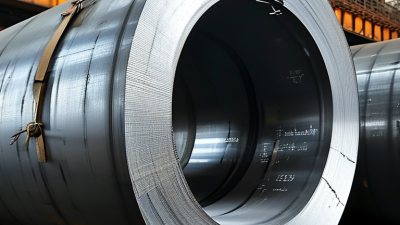
Hot Rolled Steel Bar is a fundamental product in modern construction, manufacturing, and heavy engineering. It begins as a heated steel billet, often glowing orange above 1,000°C. Powerful rollers reduce its thickness and shape it into round, square, flat, or rectangular sections. The process improves productivity and supports large-volume production. It also leaves a visible mill scale on the surface.
As materials scientist William F. Hosford states, “Rolling is the most important metalworking process.” His observation explains the process’s industrial importance, but it does not tell the whole story. Hot rolling can produce practical strength and useful toughness, yet surface finish and dimensional precision may be less consistent than cold-finished products. That difference matters when a bar enters a bearing seat, welded frame, or machined component.
This guide examines what Hot Rolled Steel Bar is, how manufacturers produce it, and where engineers commonly use it. We will consider steel grades, mechanical properties, tolerances, surface scale, cutting methods, and inspection practices. A bar may look straight and dependable. It still requires verification.
Heat changes everything.
Readers will also see why chemical composition, cooling conditions, and bar size influence performance. Tensile strength alone cannot define quality. Grain structure, internal defects, and traceability deserve attention too. Some explanations of hot rolled steel sound overly simple. That is a weakness worth correcting. Real purchasing decisions depend on standards, mill certificates, application loads, and the environment surrounding the finished bar.
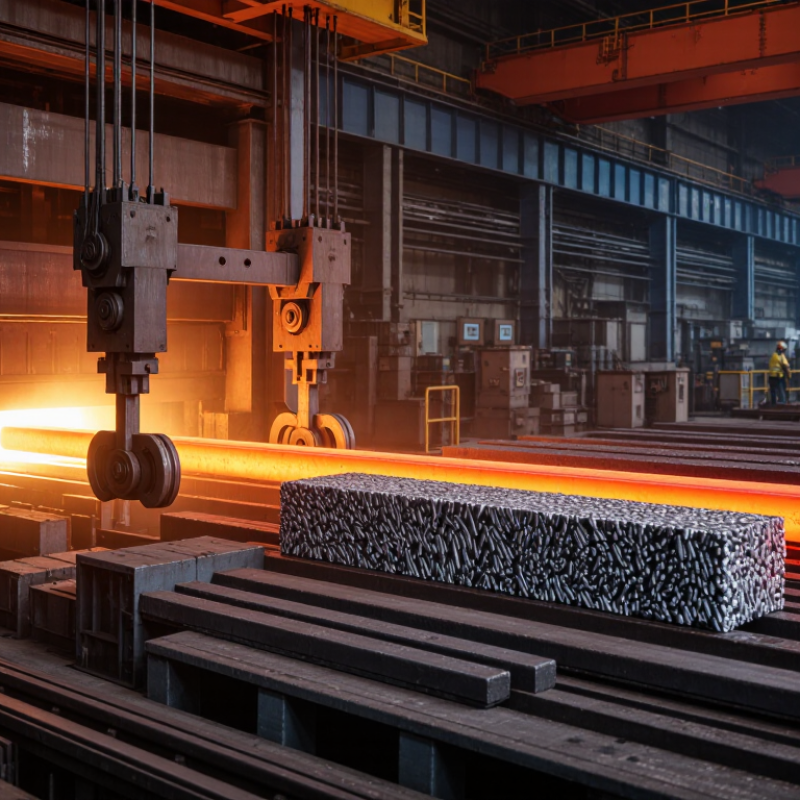
Hot rolled steel bar is steel shaped above its recrystallization temperature, usually exceeding 1,000°C. The heated billet passes through rollers, which reduce its section and create round, square, or flat profiles. Cooling happens in open air, so the surface often shows dark mill scale and gentle dimensional variation.
According to the World Steel Association, global crude steel production reached about 1.89 billion tonnes in 2023. That scale explains why hot rolled bars remain common in construction, machinery, and general fabrication. Their production is comparatively efficient, while the reduced internal stress supports cutting, welding, and bending. ASTM A36 and EN 10025 specifications are often used to define mechanical requirements, but the exact grade must match the design load and service environment.
The surface is not polished.
In practical inspection, measure diameter at several points, check straightness, and look for seams or deep scale. Hot rolled bar is usually less dimensionally precise than cold finished bar. That difference can affect shafts, pins, and close-fit components. A common mistake is treating “strong” as “suitable.” Strength alone does not address corrosion, fatigue, impact, or weldability. I would also question simple claims about lower cost, because transport, machining allowance, and scale removal may change the final calculation.
Hot rolled steel bar is steel shaped at temperatures above its recrystallization point, which improves formability and enables efficient production of round, square, and flat sections. The chart compares the minimum specified yield and tensile strengths of commonly used structural and reinforcing steel grades.
Hot rolled steel bars begin as cast billets, which are reheated in a controlled furnace. The temperature often reaches about 1,100–1,250°C, depending on the steel grade and bar size. Heat matters. It softens the billet enough for efficient shaping without cutting away most of the material.
The glowing billet passes through several rolling stands. Each stand reduces its thickness and gradually forms a round, square, or flat profile. High-pressure water removes surface scale before later passes. The bar then moves through sizing rolls, where operators adjust its dimensions and profile. Small changes in roll alignment can affect straightness. The surface tells a story.
After rolling, bars travel along a cooling bed. Their temperature drops in open air, which allows the steel structure to develop naturally. Once cool, the bars are straightened and cut into specified lengths. Some facilities use controlled cooling to improve strength and reduce internal stress, but results depend on chemistry, temperature, and production speed.
Quality checks usually include dimensional measurement, visual inspection, and tests for mechanical properties. Inspectors may also examine surface cracks or deep scale. Hot rolling is efficient, but it is not perfectly uniform. Minor variation can remain, especially near bar ends. Careful process control and documented testing help determine whether each batch meets its required specification.
Hot rolled steel bar is produced above its recrystallization temperature, commonly around 1,000°C or higher. Steel billets pass through rollers while still red-hot. This process reduces thickness and creates useful shapes. The surface may show dark oxide scale, and dimensions can vary slightly after cooling. That is normal, not necessarily a defect.
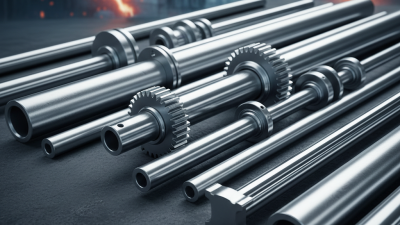
Round bars suit shafts, pins, axles, and general fabrication.
Square bars provide balanced edges for frames, supports, and machined parts.
Flat bars are practical for brackets, base plates, and reinforcing details.
Hexagonal bars offer multiple gripping faces, often helping with fasteners and turned components.
Angle bars are also widely used, although they are usually classified as structural sections rather than simple bar stock.
Shape matters more than appearance.
The World Steel Association reported approximately 1.89 billion tonnes of crude steel production in 2023, showing the scale of the steel supply chain. The U.S. Geological Survey’s Mineral Commodity Summaries 2024 also highlights steel’s continuing dependence on iron ore and recycled scrap. These figures do not measure hot rolled bars directly, but they explain why material consistency and traceability matter. In practice, buyers should check the grade, heat number, diameter tolerance, surface scale, and test certificate. A bar that looks straight may still need machining allowance. This is easy to overlook.
Hot rolled steel bar is shaped above its recrystallization temperature, usually exceeding 1,000°C. This process improves productivity and supports efficient production of round, square, flat, and reinforcing bars. The World Steel Association reported 1.89 billion metric tons of crude steel production in 2023, showing the scale of this material’s industrial role.
Its key performance characteristic is strength balanced with ductility. Under ASTM A615 requirements, common Grade 60 reinforcing bar provides at least 60 ksi yield strength and 90 ksi tensile strength. Actual performance depends on chemistry, cooling conditions, section size, and testing direction. ASTM A29 also emphasizes dimensional tolerances and mechanical testing for carbon and alloy steel bars.
It feels substantial in the hand, but surface scale can hide small defects. Inspectors should check diameter, straightness, heat number, and mill certificates before fabrication.
Hot rolled bars usually retain more dimensional variation than cold-finished bars. That trade-off reduces processing cost but may affect precision assemblies. The rough, dark surface also needs cleaning before painting or coating. Welding requires care; strength alone does not guarantee weldability. Carbon equivalent and preheating requirements matter.
Real stock is rarely perfect. Temperature gradients can create residual stress, and careless storage can encourage corrosion. Engineers should match the grade to load, forming, welding, and service conditions rather than choosing solely by tensile strength.
What Is Hot Rolled Steel Bar?
Typical Applications and Selection Considerations
Hot rolled steel bar is shaped while the steel remains above its recrystallization temperature. This process reduces forming force and suits large sections. The surface usually carries dark mill scale. Dimensions may vary more than cold finished bar. That difference matters in practical fabrication.
These bars commonly serve in frames, shafts, brackets, pins, base plates, and general machine parts. Construction teams also use them for structural supports and welded assemblies. For example, a 40-millimeter round bar can become a hinge pin after machining. A flat bar may support a fabricated platform. The application decides the shape.
Selection begins with the required load, bar size, and steel grade. Check yield strength, tensile strength, impact performance, and elongation. Welding needs careful review. Some grades may require controlled heat input or preheating. Machined parts may need extra stock for scale removal. Do not assume a larger diameter always improves performance.
Consider corrosion exposure, temperature, cutting method, and final tolerances. Outdoor parts may need coating or another suitable material choice. Ask for test certificates and confirm the applicable material standard. Inspect surface cracks, deep scale, bends, and length variation during receiving. I have seen projects lose time because the bar was strong enough, but poorly suited to machining. Selection is not always perfect. Recheck the decision against real service conditions.
| Steel Bar Feature | Typical Characteristics | Typical Applications | Selection Considerations |
|---|---|---|---|
| Manufacturing Process | Steel is heated above its recrystallization temperature and shaped by rolling. The resulting surface is usually covered with mill scale. | General structural fabrication, welded frames, supports, brackets, and industrial equipment. | Choose hot rolled material when cost, availability, and structural performance are more important than a highly finished surface. |
| Common Bar Shapes | Round, square, rectangular, and flat bars are commonly produced in a wide range of sizes. | Machine components, base plates, rails, frames, shafts, pins, and reinforcement details. | Select the cross-section according to load direction, connection method, machining allowance, and available stock sizes. |
| Surface Finish | The surface is generally rougher than cold finished steel because of oxidation and mill scale formed during heating. | Outdoor structures, fabricated assemblies, welded components, and parts that will be machined or coated. | Allow for descaling, grinding, painting, galvanizing, or machining if appearance, dimensional precision, or corrosion protection is required. |
| Dimensional Accuracy | Dimensions and straightness generally have wider tolerances than cold drawn or precision-ground bars. | Large structural parts, rough-machined components, and assemblies where tight tolerances are not critical. | Check the applicable product standard and specify tighter tolerances or additional machining when accurate fits are necessary. |
| Mechanical Performance | Mechanical properties depend on the grade, chemical composition, section size, and manufacturing standard. Common carbon structural grades offer a balance of strength, ductility, and weldability. | Load-bearing frames, platforms, supports, brackets, pins, and general-purpose fabricated parts. | Compare yield strength, tensile strength, elongation, impact toughness, and hardness with the design requirements. |
| Weldability | Low- and medium-carbon hot rolled steels are commonly suitable for welding, subject to grade, thickness, joint design, and procedure control. | Building frames, machine bases, agricultural equipment, transport structures, and repair fabrications. | Review carbon equivalent, thickness, hydrogen control, preheating requirements, and the qualified welding procedure. |
| Machinability | Hot rolled bars can be machined, but the mill scale may increase tool wear and must often be removed before precision cutting. | Rough-machined shafts, hubs, pins, spacers, couplings, and general mechanical parts. | Include machining allowance and consider a cold finished or precision-machined product when close dimensional control is required. |
| Corrosion Resistance | Ordinary carbon hot rolled steel is not inherently corrosion-resistant and can rust when exposed to moisture and oxygen. | Indoor structures, protected equipment, and outdoor components with a specified protective coating. | Specify paint, powder coating, galvanizing, weathering steel, or another suitable corrosion-control system based on the service environment. |
| Strength-to-Cost Balance | Hot rolled bars are widely available and typically economical for bulk structural and fabrication work. | Construction supports, industrial frames, trailers, material-handling equipment, and general fabrication. | Balance material price with cutting, descaling, machining, welding, coating, inspection, and lifecycle costs. |
| Material Certification | Certificates may include chemical composition, tensile properties, dimensions, heat information, and inspection results. | Regulated construction, pressure-related support structures, safety-critical fabrications, and audited projects. | Specify the required standard, grade, test documentation, traceability, inspection level, and acceptance criteria before ordering. |