Gangtuo
Integrity, Innovation, And Win-Win
Contact us

China Top 10 Cold Rolled Steel Manufacturers?

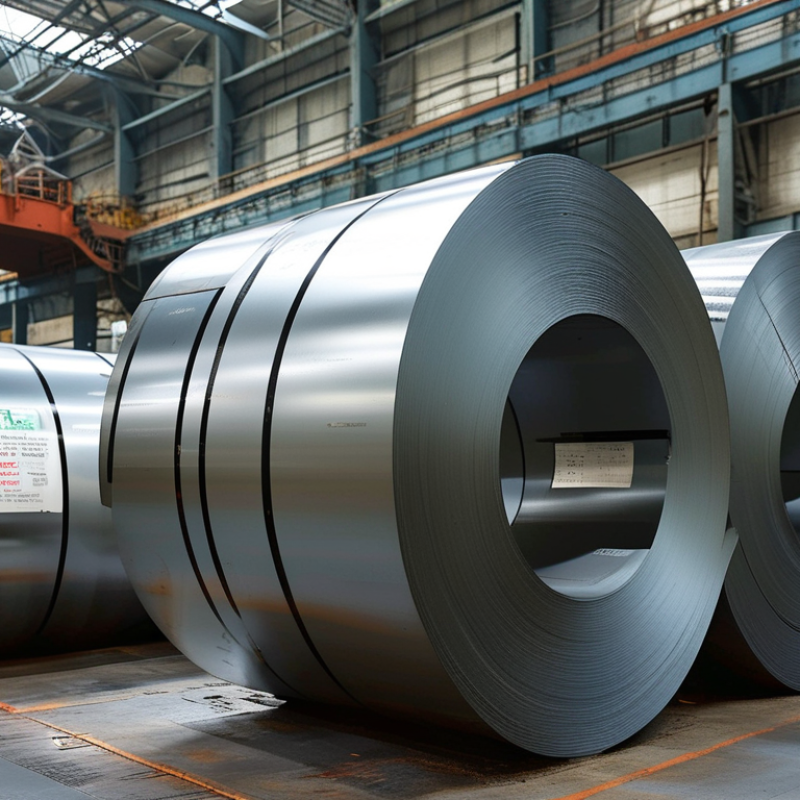
Choosing the China Top 10 Cold Rolled Steel Manufacturers requires more than comparing production volume. Buyers must examine steel grades, thickness tolerance, surface finish, coil weight, and delivery performance. A polished catalog can hide practical differences.

This guide evaluates manufacturers through measurable and experience-based criteria. It considers product consistency, technical support, quality certifications, export capability, and responsiveness after quotation. Factory capacity matters, but stable rolling control matters more. Small deviations can affect stamping, bending, welding, and final painting.

Details matter here.

The selected companies represent different strengths within China’s steel industry. Some focus on automotive-grade sheets, while others serve construction, appliances, machinery, or precision fabrication. Their equipment, inspection systems, and logistics networks may vary considerably. Readers should confirm current certifications, mill test reports, packaging standards, and production schedules before placing an order.

No ranking is flawless. Market conditions change, and a manufacturer suitable for one project may be unsuitable for another. Price alone is a weak buying signal. A lower quotation may reflect different tolerances, coating requirements, payment terms, or shipping assumptions. This overview aims to provide a reliable starting point, not a final purchasing decision. It combines publicly available information with practical procurement considerations, while acknowledging that direct factory audits remain valuable. Through careful comparison, importers can identify dependable Cold Rolled Steel partners and reduce avoidable quality, communication, and delivery risks.
China Top 10 Cold Rolled Steel Manufacturers?

Cold Rolled Steel: Definition, Properties, and Main Applications

Cold Rolled Steel: Definition, Properties, and Main Applications

Cold rolled steel is produced by reducing hot rolled steel below its recrystallization temperature. The process improves thickness control and creates a cleaner, smoother surface. Annealing can restore ductility after rolling, while skin-pass treatment adds a controlled finish and flatter shape.

World Steel Association data recorded about 1.89 billion tonnes of global crude steel production in 2023. Cold rolled products represent only one downstream segment, not the entire volume. Still, their precision makes them valuable. Typical thickness tolerances may reach fractions of a millimeter, depending on grade and mill capability. The material offers good formability, consistent strength, and reliable paint adhesion. Surface quality matters here.

Manufacturers use cold rolled sheet for vehicle panels, appliance housings, office furniture, electrical cabinets, and precision tubes. Higher-strength grades support lighter automotive structures, but excessive strength can reduce formability. That trade-off is often underestimated. The International Energy Agency reports that steelmaking creates roughly 8% of global energy-related carbon dioxide emissions. Cold rolling consumes less heat than initial steelmaking, yet its electricity, annealing, and coating stages still affect emissions. Buyers should examine gauge tolerance, yield strength, surface grade, and production traceability rather than choosing only by price. Small specification gaps can become visible dents, cracking, or costly rework.
Cold Rolled Steel: Typical Tensile Strength by Grade

Comparison of commonly specified cold rolled low-carbon steel grades under EN 10130.

Cold rolled steel is processed at room temperature to achieve a smoother surface, tighter dimensional tolerances, and improved formability. The tensile-strength ranges shown are typical EN 10130 specification ranges for drawing-quality grades and may vary according to product condition and supplier certification.

How China’s Top 10 Cold Rolled Steel Manufacturers Are Selected

China Top 10 Cold Rolled Steel Manufacturers?

Selecting China’s top ten cold rolled steel manufacturers requires more than checking annual output. The World Steel Association reported China produced about 1,005 million tonnes of crude steel in 2024. However, crude steel volume does not prove strong cold rolling capability. A credible selection should examine cold rolled capacity, operating rates, export records, and product certification.

Production data comes from audited company disclosures, customs statistics, and specialist market reports such as CRU and Mysteel. Quality evaluation should include thickness tolerance, surface finish, yield strength, and coil weight consistency. During plant visits, buyers should inspect annealing lines, skin-pass mills, storage conditions, and sample testing records. Small details matter. Rust marks can appear after poor warehouse ventilation.

Delivery reliability also deserves serious weight. The OECD’s steel market analysis highlights persistent global overcapacity and weaker demand conditions. Therefore, the ranking should consider utilization stability, lead-time performance, complaint handling, and financial resilience. Export shipment data can reveal activity, but it cannot fully measure domestic contracts or private production.

No ranking is flawless. Public figures may lag behind actual capacity changes, while some quality information remains confidential. A transparent scoring model could assign 30% to technical quality, 25% to production capability, 20% to delivery performance, 15% to compliance, and 10% to customer evidence. The method should be reviewed annually. Otherwise, yesterday’s leading producer may receive tomorrow’s misplaced reputation.

China Top 10 Cold Rolled Steel Manufacturers? - How China’s Top 10 Cold Rolled Steel Manufacturers Are Selected

Rank Evaluation Dimension Weight What Is Measured Evidence Required Why It Matters
1 Production Capacity and Stability 20% Cold-rolling, annealing, skin-pass, leveling, and slitting capacity; operating continuity; delivery capability. Published plant information, production-line records, capacity statements, and recent delivery history. Stable capacity reduces supply interruptions and supports repeat orders with consistent lead times.
2 Product Range 15% Availability of commercial-quality, drawing-quality, high-strength, galvanized-feed, and other cold-rolled grades. Grade lists, technical datasheets, mill certificates, and sample specifications. A broader range allows buyers to source multiple applications from one qualified supplier.
3 Dimensional Accuracy 12% Thickness tolerance, width tolerance, flatness, edge condition, crown, and coil shape. Inspection reports, applicable standards, process-control records, and customer acceptance data. Precise dimensions improve forming performance, yield, and downstream processing efficiency.
4 Surface Quality 10% Surface finish, cleanliness, scratch control, rust prevention, and suitability for painting, coating, or stamping. Surface inspection standards, defect classification, packaging specifications, and representative samples. Good surface quality lowers rejection rates and improves the appearance of finished products.
5 Standards and Certifications 10% Compliance with relevant international, national, and customer-specific standards. Valid certificates, third-party audits, declarations of conformity, and product test reports. Verified compliance supports import clearance, technical approval, and risk control.
6 Quality Management 10% Raw-material control, laboratory testing, traceability, nonconformance handling, and corrective actions. Quality manuals, inspection plans, traceability samples, audit results, and complaint-resolution records. Strong quality systems provide repeatability rather than relying only on final-product inspection.
7 Export and Logistics Capability 8% Export experience, port access, documentation accuracy, packaging, container loading, and shipment coordination. Shipping records, packing standards, export documentation samples, and logistics performance data. Reliable logistics protect coils from damage and help maintain predictable landed costs.
8 Customization and Technical Support 6% Custom dimensions, coil weight, packaging, mechanical properties, surface finish, and application guidance. Technical response records, custom-order examples, engineering support details, and trial-order results. Technical flexibility helps meet application-specific requirements and reduces qualification time.
9 Commercial Competitiveness 5% Total cost, minimum order quantity, payment terms, price transparency, and consistency of quotations. Comparable quotations, contract terms, order history, and total-cost analysis. The lowest price is not always the lowest total cost; quality and delivery risks must be included.
10 Sustainability and Business Reliability 4% Environmental controls, energy efficiency, responsible sourcing, financial continuity, and after-sales responsiveness. Environmental records, sustainability disclosures, supplier assessments, and service-performance history. Responsible and dependable operations support long-term procurement and compliance objectives.
Total Evaluation Weight 100% Final selection should combine documented evidence, sample evaluation, audit findings, and verified customer or shipment performance.
Selection Method: Candidates are scored against the weighted criteria above on a 100-point scale. Only manufacturers with verifiable production capability, documented quality controls, compliant products, and dependable delivery performance should be considered for a Top 10 list.

China’s Top 10 Cold Rolled Steel Manufacturers

China’s Top 10 Cold Rolled Steel Manufacturers should be assessed beyond production scale. The strongest producers usually combine integrated steelmaking, continuous annealing, skin-pass rolling, and strict surface inspection. Their products serve automobiles, appliances, construction, electrical equipment, and precision fabrication.

The World Steel Association reported that China produced about 1.005 billion tonnes of crude steel in 2024. This enormous base supports stable cold rolled steel supply, but capacity alone does not prove product quality. A practical top-ten evaluation should examine gauge tolerance, yield strength consistency, surface cleanliness, coil shape, export experience, and delivery performance. CISA industry data also highlights ongoing pressure to improve efficiency and reduce energy use across Chinese steel production.

Quality matters more than volume.

Purchasers should request mill test certificates, coating or oiling details, inspection records, and traceability information. Automotive-grade material requires tighter controls than general commercial-grade sheet. Public rankings remain imperfect because companies disclose different capacity figures and product ranges. Some manufacturers excel in high-strength grades, while others perform better in large-volume commodity orders. Buyers should compare recent production evidence, not rely on a simple online ranking. Production technology can change quickly. Supplier audits still matter.

Product Grades, Production Capacity, and Quality Standards

China Top 10 Cold Rolled Steel Manufacturers?

A credible top-ten list should compare evidence, not promotional rankings. In practice, buyers should verify each mill’s rolling capacity, export experience, and production continuity. Annual capacity figures may include several product lines. That can mislead. Effective cold rolling capacity matters more than a large headline number.

Product grades reveal technical capability. Common options include SPCC, SPCD, SPCE, DC01, DC03, and DC04. Automotive applications may require higher-strength or HSLA grades. Each grade should match forming depth, yield strength, surface finish, and thickness tolerance. Ask for mill test certificates and recent inspection records. Small details matter.

Quality standards provide a clearer comparison. Strong suppliers usually work under GB/T 708, EN 10130, or ASTM A1008 requirements. ISO 9001 supports process control, while automotive projects may require IATF 16949. Check chemical composition, hardness, flatness, roughness, and coil weight. Independent testing can verify disputed results. It costs more, but errors cost more. Some manufacturers appear highly capable on paper, yet their delivery stability or defect response remains unclear. A careful buyer should review sample coils, inspection photos, packing methods, and corrective-action records before selecting among China’s leading producers.

How to Choose a Chinese Cold Rolled Steel Manufacturer

How to Choose a Chinese Cold Rolled Steel Manufacturer

Choosing a Chinese cold rolled steel manufacturer requires more than comparing prices. Begin by checking production experience, equipment capacity, and export records for your target market. Ask whether the factory produces the steel or only trades it. This distinction affects traceability, lead times, and technical support.

Request recent mill certificates showing chemical composition, yield strength, tensile strength, hardness, and dimensional tolerances. Compare these values with your drawings and applicable standards. A reliable supplier should explain its annealing, pickling, skin-pass, and slitting processes clearly. Do not accept vague claims. Ask for batch numbers, inspection records, and photographs of finished coils. Independent inspection can reveal surface scratches, edge cracks, or inconsistent thickness before shipment.

Quality should be tested before trust is extended. Send a small trial order with precise requirements for width, thickness, coil weight, packaging, and labeling. Check how quickly the manufacturer answers technical questions. Slow replies may signal weak engineering support. Review payment terms, production schedules, complaint procedures, and replacement policies in writing. Some suppliers look impressive online but provide limited factory access. That matters. A video tour is useful, yet an on-site audit offers stronger evidence. I would also reassess the lowest quotation, because hidden costs can appear through rework, delays, or poor packaging. Even experienced buyers sometimes overlook humidity protection during ocean transport. Ask for desiccants, sealed wrapping, and loading photos before approval.