Essential Tips for Sourcing Quality Stainless Steel Pipe?
When sourcing quality stainless steel pipe, understanding your options is essential. Stainless steel pipes come in various grades and specifications, each suitable for different applications. Choosing the right pipe can significantly impact your project’s success. Attention to detail during the sourcing process can prevent costly mistakes.
Quality should never be compromised. Not all suppliers offer the same reliability. Researching suppliers to understand their track record is crucial. Look for those who have experience in the industry. Reading reviews and asking for references can provide valuable insights. Sometimes, an attractive price might indicate hidden quality issues.
Real-world experiences highlight common challenges in sourcing stainless steel pipe. Issues like delayed deliveries and subpar materials arise often. These setbacks can derail projects, leading to frustration and losses. A thorough evaluation of potential suppliers will help mitigate these risks. Trust your instincts but back them with data and insights.
Understanding Stainless Steel Pipe Grades and Their Applications
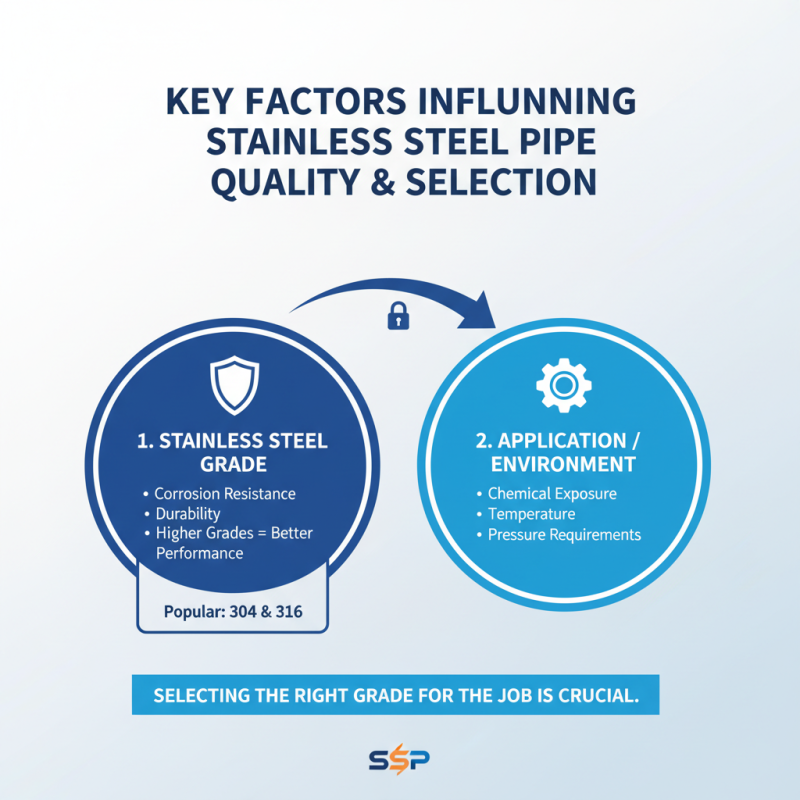
When sourcing stainless steel pipe, understanding grades is crucial. There are several key grades, including the well-known 304 and 316. These grades vary in composition and application, impacting your decision. For instance, 304 stainless steel is common due to its excellent corrosion resistance and formability. It accounts for about 50% of all stainless steel production, as noted in industry reports.
In contrast, 316 stainless steel offers superior corrosion resistance, especially in chloride environments. This grade is essential for marine and chemical processing applications. According to the American Institute of Steel Construction, approximately 20% of stainless steel consumption is attributed to 316 grade. Assessing the specific environment of your application is vital when choosing the right grade. Each project may present challenges, and a misstep in material selection could lead to early failure and increased costs.
Stainless steel pipe selection is not merely technical; it requires a nuanced understanding of material properties and environmental factors. Reflecting on past projects can reveal lessons that enhance future sourcing strategies. Striving for precision in material selection can drive project success.
Essential Tips for Sourcing Quality Stainless Steel Pipe - Understanding Stainless Steel Pipe Grades and Their Applications
| Pipe Grade |
Chemical Composition |
Mechanical Properties |
Applications |
| 304 |
18% Cr, 8% Ni |
Tensile Strength: 520 MPa, Yield Strength: 215 MPa |
Food processing, chemical equipment |
| 316 |
16% Cr, 10% Ni, 2% Mo |
Tensile Strength: 580 MPa, Yield Strength: 290 MPa |
Marine applications, pharmaceuticals, chemical processing |
| 321 |
17% Cr, 9% Ni, Ti stabilizer |
Tensile Strength: 570 MPa, Yield Strength: 240 MPa |
High-temperature applications, exhaust manifolds |
| 410 |
13% Cr |
Tensile Strength: 450 MPa, Yield Strength: 185 MPa |
Cutlery, valves, and surgical instruments |
Critical Testing Standards for Quality Assurance in Stainless Steel Pipes
When sourcing quality stainless steel pipes, testing standards play a critical role in ensuring durability and performance. The ASTM (American Society for Testing and Materials) establishes several benchmarks. For piping, standards like ASTM A312 are essential for defining various grades and types. These standards dictate the chemical composition and mechanical properties necessary for industrial applications.
Quality assurance often involves rigorous testing procedures. For instance, tensile strength is a key factor. It should typically exceed 70,000 psi for many applications. Moreover, corrosion resistance tests are crucial. According to industry reports, about 25% of pipe failures result from inadequate corrosion resistance. Conducting thorough tests helps prevent such failures and promotes long-term reliability.
Furthermore, non-destructive testing methods, such as ultrasonic testing, assess flaws without damaging the pipe. This approach is increasingly important in critical applications like oil and gas. However, many suppliers overlook these standards, risking project failures. Overall, understanding these critical testing standards is vital for anyone involved in sourcing stainless steel pipes.
Cost Considerations and Budgeting for Stainless Steel Pipe Procurement
When budgeting for stainless steel pipe procurement, understanding the costs involved is crucial. Prices can fluctuate based on market demand and raw material availability. It's essential to gather multiple quotes to gauge the average market price. A sudden spike in steel prices can disrupt your budget. Monitoring industry trends can help in planning purchases effectively.
Consider additional costs beyond the pipe itself. Shipping fees, taxes, and handling charges can add up quickly. Evaluate the total cost of ownership, not just the initial purchase price. Sometimes a cheaper option may lead to higher maintenance or replacement costs. Investing in quality upfront can save money in the long run.
Quality assurance is vital. Ensure your supplier conducts regular quality checks. This minimizes risks of defects that can lead to costly repairs later. Don’t hesitate to ask for certifications or specifications. Being informed is key to making sound financial decisions. Reflect on past procurement experiences; what could have been improved? Learning from mistakes can refine your sourcing strategy.
Evaluating Suppliers: Certifications and Reputation for Quality Assurance
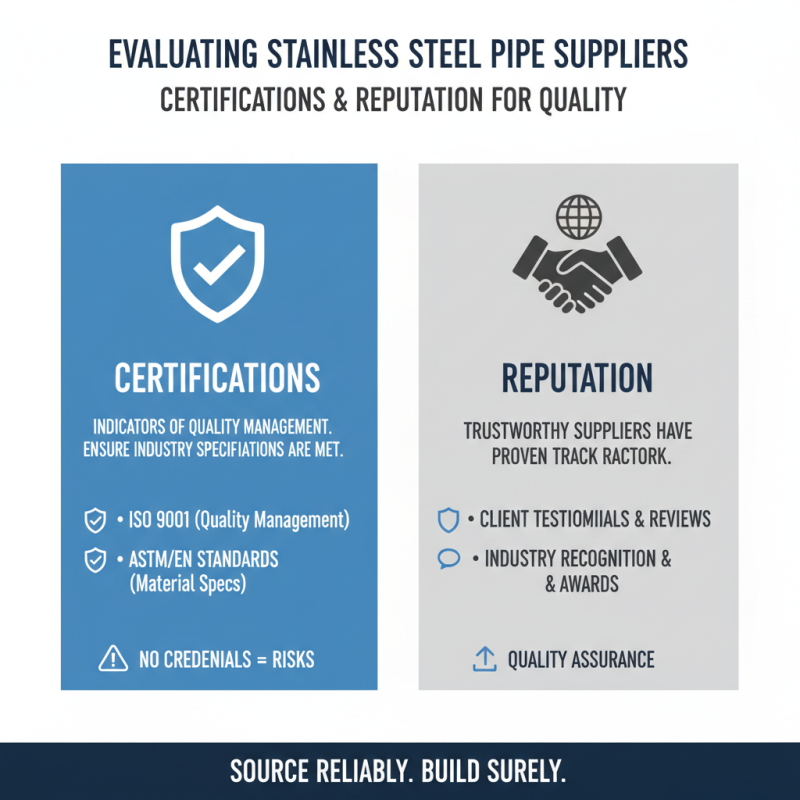
When sourcing quality stainless steel pipes, evaluating suppliers is crucial. Start by examining their certifications. Look for ISO standards, which indicate adherence to quality management. Certifications ensure that materials meet industry specifications. A supplier without these credentials may raise red flags.
Reputation matters in the supplier selection process. Research online reviews and testimonials. Speak to previous clients to gather insights. Reliable suppliers often showcase their experience in similar projects. This experience can reflect their ability to meet your specific needs. However, don't be swayed solely by positive feedback; ensure it comes from credible sources.
Additionally, consider engaging with suppliers directly. Ask questions about their sourcing practices and quality control measures. This communication can reveal their commitment to quality. Sometimes, suppliers may claim to excel but fall short in practice. Trust your instincts and verify all information before making a decision.