Choosing reliable machinery steel suppliers in 2026 requires more than comparing prices. Global buyers need consistent chemistry, dependable delivery, and clear technical evidence. Machinery Steel supports shafts, gears, frames, molds, and other demanding components. Its performance depends on grade accuracy, heat treatment, machining quality, and application design.
Experienced buyers usually begin with the intended service conditions. Load, temperature, wear, corrosion, and production volume all influence the correct steel choice. A supplier should provide mill certificates, heat numbers, dimensional reports, and traceability records. Independent inspection can verify tensile strength, hardness, impact performance, and surface condition. Small details matter here. A missing heat number can complicate an entire shipment review.
This guide examines leading Machinery Steel suppliers for international procurement teams. It considers production capability, export experience, quality systems, customization, packaging, and after-sales support. Certifications can help, but they should not replace practical verification. Buyers should request recent test reports and confirm whether laboratories are properly accredited. Factory audits may reveal storage risks, labeling weaknesses, or inconsistent inspection routines.
No supplier is perfect. Even a respected mill can face delays, specification misunderstandings, or communication gaps. That reality deserves attention. Strong purchasing decisions compare documented performance, not promotional promises. They also include clear tolerances, delivery terms, inspection points, and corrective-action procedures. Regional availability, tariffs, and transport conditions may change during 2026. Therefore, buyers should verify current information before signing contracts. The best supplier is not always the largest. It is the one that consistently matches technical requirements with honest communication and measurable quality.
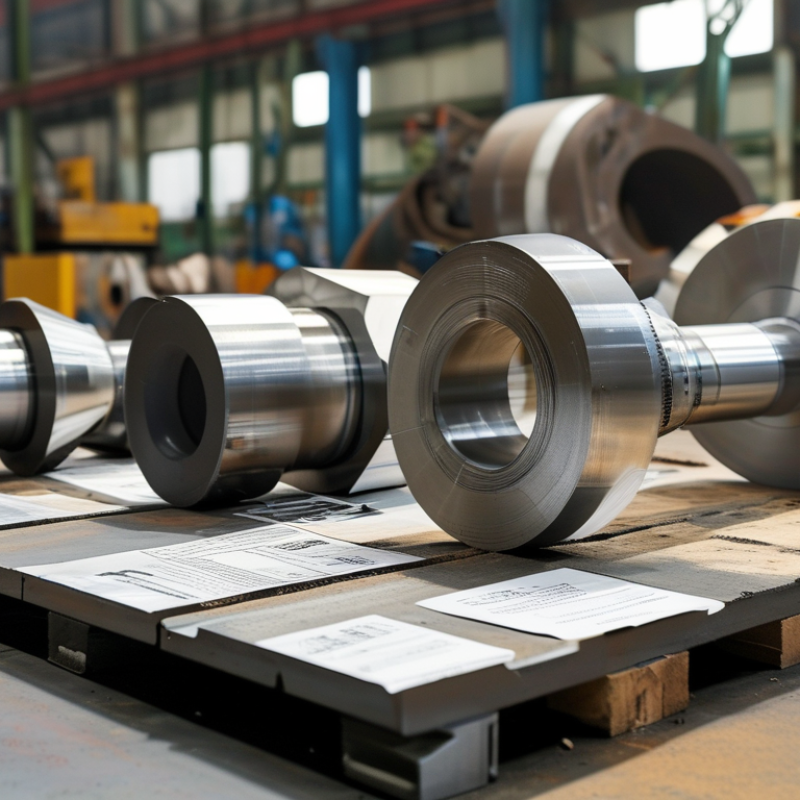
2026 Top Machinery Steel Suppliers for Global Buyers?
What Machinery Steel Is and Why Global Buyers Need It in 2026
Machinery steel is engineered carbon or alloy steel for shafts, gears, axles, frames, pins, and wear parts. Its value lies in controlled chemistry, strength, toughness, and machinability. Heat treatment can change the steel’s performance dramatically. A hardened gear tooth and a resilient shaft may need different grades.
World Steel Association data shows global crude steel production reached about 1.88 billion tonnes in 2024. Volume is not the same as reliability. Buyers must verify mill certificates, dimensional tolerances, ultrasonic testing, and heat-treatment records. Small flaws can become costly failures inside a press or lifting system.
The OECD projects global steel overcapacity could reach 721 million tonnes by 2027. This makes supplier evaluation more important in 2026. Machinery manufacturers need stable batches, traceable production, and predictable cutting performance. These factors reduce scrap and unplanned downtime.
The details matter.
A practical sourcing review should compare tensile strength, impact toughness, surface condition, and delivery consistency. EN, ASTM, or JIS references help, but they do not replace independent inspection. A certificate can look complete and still leave questions about sampling. Global buyers should ask how each result was measured. That extra step is inconvenient, yet often decisive.
A practical comparison of widely traded machinery-steel grades, international standards, performance characteristics, applications, and supplier-qualification requirements for global procurement.
| Machinery Steel Grade | Common International Reference | Steel Classification | Typical Carbon Content | Typical Mechanical Condition | Key Performance Characteristics | Typical Machinery Applications | Recommended Buyer Checks |
|---|---|---|---|---|---|---|---|
| AISI 1045 | EN C45 / DIN C45E JIS S45C |
Medium-carbon steel | Approximately 0.43–0.50% | Normalized, annealed, or quenched and tempered | Good machinability, moderate strength, and suitable wear resistance after heat treatment | Shafts, pins, studs, axles, gears, and general machine components | Confirm hardness, tensile strength, straightness, surface condition, and heat-treatment records |
| AISI 4140 | EN 42CrMo4 / DIN 1.7225 JIS SCM440 |
Chromium-molybdenum alloy steel | Approximately 0.38–0.43% | Frequently supplied quenched and tempered | High strength, good hardenability, fatigue resistance, and toughness | Hydraulic rods, heavy-duty shafts, bolts, gears, tooling, and forged machine parts | Verify tempering temperature, hardness range, ultrasonic testing, and impact-test requirements |
| AISI 4340 | EN 34CrNiMo6 / DIN 1.6582 JIS SNCM439 |
Nickel-chromium-molybdenum alloy steel | Approximately 0.38–0.43% | Usually quenched and tempered | Very high strength, strong toughness, and excellent fatigue performance when properly treated | Aircraft-related components, high-load shafts, landing-gear parts, gears, and heavy-duty fasteners | Request full tensile and impact data, hardness mapping, cleanliness results, and traceability documentation |
| AISI 8620 | EN 20NiCrMo2-2 / DIN 1.6523 JIS SNCM220 |
Case-hardening alloy steel | Approximately 0.17–0.23% | Carburized and quenched, with a tough low-carbon core | Hard wear-resistant case combined with a ductile and impact-resistant core | Transmission gears, pinions, bushes, cams, sprockets, and automotive drivetrain parts | Specify effective case depth, surface hardness, core hardness, distortion limits, and carburizing process |
| AISI 52100 | EN 100Cr6 / DIN 1.3505 JIS SUJ2 |
High-carbon chromium bearing steel | Approximately 0.95–1.10% | Spheroidized annealed or hardened and tempered | High hardness, strong rolling-contact fatigue resistance, and good dimensional stability after treatment | Bearings, rollers, precision bushings, linear-motion components, and wear-resistant parts | Check carbide distribution, retained austenite, dimensional stability, hardness, and surface finish |
| AISI 4130 | EN 25CrMo4 / DIN 1.7218 JIS SCM430 |
Low-alloy chromium-molybdenum steel | Approximately 0.28–0.33% | Normalized or quenched and tempered | Good weldability for an alloy steel, useful strength-to-weight ratio, and good toughness | Frames, pressure-containing machine parts, structural brackets, shafts, and welded assemblies | Confirm weldability requirements, carbon equivalent, impact performance, and post-weld treatment |
| AISI 5140 | EN 41Cr4 / DIN 1.7035 | Chromium alloy steel | Approximately 0.38–0.43% | Normalized or quenched and tempered | Better hardenability and wear resistance than plain medium-carbon steel | Axles, studs, levers, machine shafts, gears, and forged components | Review hardness uniformity, microstructure, forging quality, and non-metallic inclusion limits |
| AISI 1008 / 1010 | EN DC01 / C10 JIS SPHC or equivalent grade depending on product form |
Low-carbon steel | Generally below 0.10% | Cold-rolled, hot-rolled, or annealed | High ductility, easy forming, and good weldability; not intended for high-strength applications | Guards, brackets, covers, fabricated machine housings, and formed sheet parts | Confirm product-form standard, yield strength, elongation, surface class, and forming requirements |
| ASTM A36 | Comparable structural grades vary by region; equivalence must be verified | General structural carbon steel | Controlled by the applicable product specification | Hot-rolled plate, bar, angle, channel, or structural section | Good weldability and general-purpose structural performance | Machine bases, support frames, platforms, brackets, and non-critical structures | Verify the exact ASTM product form, yield strength, tensile strength, impact requirements, and mill certificate |
| AISI 316 / 316L | EN 1.4401 / 1.4404 JIS SUS316 / SUS316L |
Austenitic stainless steel | 316: typically up to 0.08% 316L: typically up to 0.03% |
Solution-annealed | Strong corrosion resistance, especially in chloride-containing and chemical environments | Food-processing machinery, chemical equipment, pumps, valves, fasteners, and marine components | Check molybdenum content, corrosion environment, surface finish, intergranular-corrosion requirements, and passivation |